Sometimes when a
deer is shot, for one reason or another it might run
off. Often these
deer are located by the hunter following the blood
trail. When the blood trail is sparse
or hard to find, sometimes due to weather conditions,
and the hunter has exhausted his abilities to track the
deer, one of our dogs can be brought in. All of our dogs
are worked
on lead, and never run after or follow healthy deer.
Dogs can track wounded deer even when there is no visual
blood by using their nose to find what the hunter can
not see or smell. |
Even if you object
to hunting, there are benefits to Deer Recovery. Just a
few are;
-
The injured deer is not left to suffer.
- The deer is not wasted.
-
The hunter has to 'tag' a deer we find, reducing the
number shot.
-
Your dog can get out and do something enjoyable that
also helps the community.
-
It is great exercise.
|
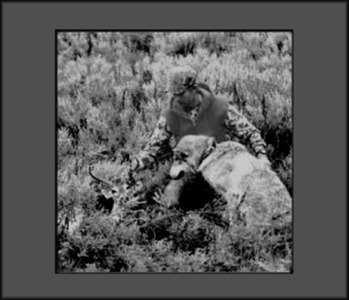
Our dogs are
rewarded with a piece of the meat or the gut pile (which
the hunter doesn't want anyway). There are also times
when we may not get the call right away, and they
only
want the antlers, in which case all of our dogs benefit
from the 'find'.
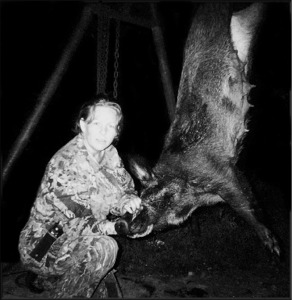
The head is tagged and a Wildlife Resource Document (WRD)
accompanies the carcass. |
According to the Texas Parks & Wildlife
website
- A person is prohibited from using a dog to hunt or
pursue deer in this state.
- It is unlawful to use dogs to trail a wounded deer in
certain counties.
- Not more than two dogs may be used to trail a wounded deer
in legal counties.
|
R.J. retired from Deer Recovery after
the 2006 hunting season. We hope to train
Cottonwoods "Bounty Hunter" as his replacement. |